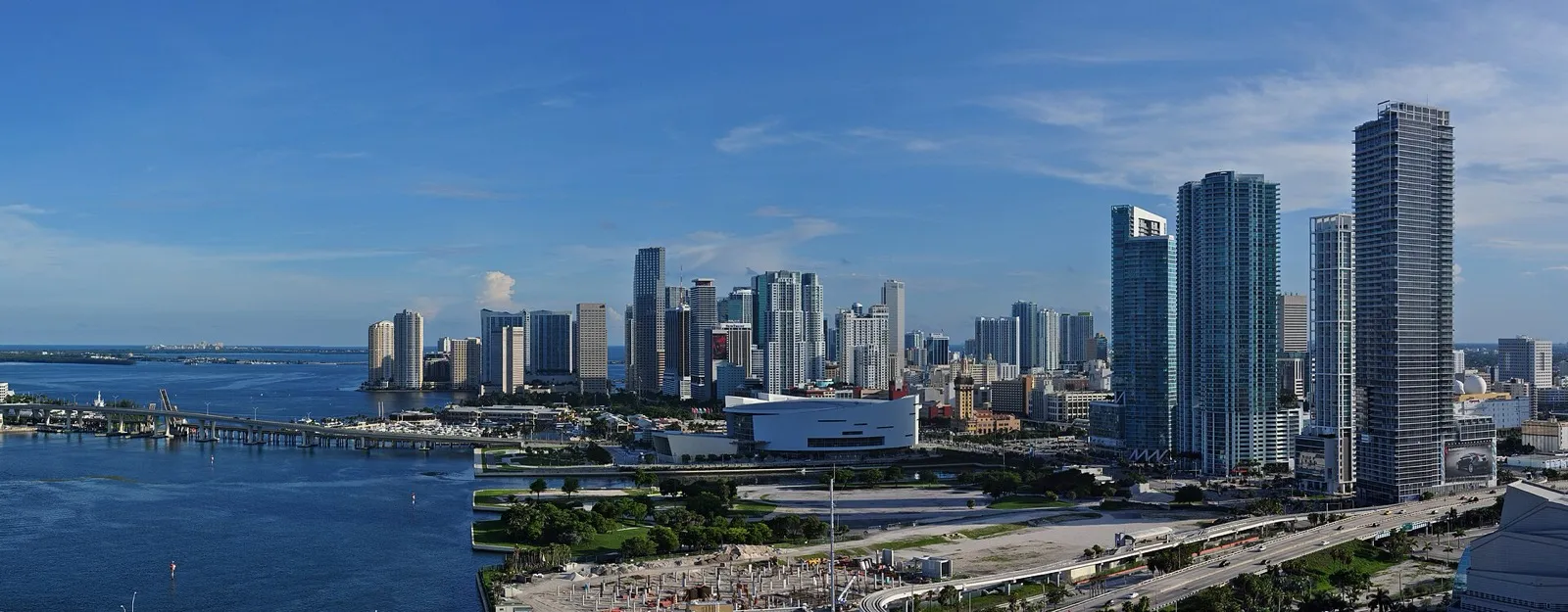
Luxury homes in Miami don't compete on square footage or finishes — they compete on something you can't manufacture: water, island and scarcity. For an HNW estate, the right decision looks more like an investment than an emotional purchase, and that is exactly how it should be made.
What defines luxury in Miami: water, island and scarcity
True luxury in Miami isn't the size of the house — it's the waterfront and the address. The guard-gated islands — Star Island, La Gorce, the Venetian Islands — and enclaves like Indian Creek (the so-called "Billionaire Bunker") or Bal Harbour hold what can't be replicated: lots with deep-water docks, controlled access and finite supply. The range runs from roughly US$10M to north of US$100M for bayfront or oceanfront positions. What holds price over time is the scarcity of the land, not the finishes of the moment.
Want to see the luxury properties available?
View properties →Branded residences: the segment that sets the ceiling
Miami has become the capital of branded residences: towers and villas signed by luxury houses — Aston Martin, Bentley, Bvlgari, Four Seasons, Rosewood, among others — offering hospitality service, curated design and a brand that travels with the asset. You pay a premium for that signature and the services; in return you get flawless operation and, in the right projects, a more liquid resale because the brand limits risk for the next buyer. Not all brands age the same: the judgment lies in telling the signature that adds value from the one that only adds cost.
Privacy, security and dockage
For many HNW buyers from Latin America, privacy and security aren't an extra — they're the thesis. Guard-gated islands, integrated security systems and the discretion of the transaction weigh as much as the view. If you own a yacht, dockage is decisive: a private dock with enough draft for your length of vessel completely changes which properties qualify — and adds value not every waterfront home can offer. These criteria are defined before you look at listings, not after.
A patrimonial investment lens, not an emotional one
A luxury home in Miami is, above all, a dollar-denominated position in a scarce asset. It's worth analyzing as such: you're buying the land and the water frontage — the irreplaceable part — not the fashion of the finishes. At these amounts, structure matters: buying through an entity limits exposure to the U.S. estate tax and orders the succession, and financing, when used, is a non-resident jumbo with 30%–50% down (many pay cash). The discipline is the same as in any serious investment: compare against real sales, not against the seller's aspiration.